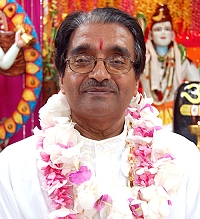

From the teachings of Paramacharya of SWAHA, H.H. Pt. Hardeo Persad
Have you ever asked yourself why we pray?
Do devotees only turn to the Divine when life becomes difficult? Do we seek divine help to fulfil a desire, solve a problem or gain answers to life’s mysteries? Or has our relationship with the Divine evolved into something deeper: a quiet trust and connection that remains unshakeable despite circumstances?
The scriptures invite each of us to reflect honestly on these questions, and describe four types of devotees, revealing not only why people seek the Divine but also how devotion can mature from dependence into wisdom, surrender and unconditional love. Understanding these categories is more than an exercise of philosophy; it is an opportunity to examine our own spiritual journey and discover where we stand today.
The Solution Is Devotion
One of the greatest challenges facing humanity is the power of Maayaa, that is, the illusion that keeps us attached to the temporary and distracted from the eternal. It convinces us that lasting happiness can be found through possessions, achievements, relationships, status and sensory pleasures. Yet no matter how much we acquire or accomplish, the cycle of wishing, attainment and dissatisfaction continues.
Human beings become so absorbed in the changing world that they forget the deeper purpose of life. We know that everything in this world is temporary, yet we live as though permanence can be found in impermanent things. We witness loss, ageing and death all around us, but still cling to the belief that fulfilment lies in what will inevitably pass away.
The solution is in devotion, self-awareness and the sincere pursuit of spiritual understanding. Through devotion, the individual gradually rises above illusion and begins to see life from a better perspective.
The Types of Devotees
The Seeker of Solutions (Aarta)
Aarta is the devotee who seeks God in times of suffering.
When there is illness, loss, fear, uncertainty or crisis arises, the individual turns to the Divine for help. In moments when human efforts fail and worldly solutions prove insufficient, faith often awakens.
The scriptures provide many examples of this type of devotion. Draupadi, when humiliated in the royal court and abandoned by all human support, called out to Lord Krishna with complete surrender. Gajendra, the elephant king, trapped by a crocodile and unable to free himself despite his strength, ultimately sought refuge in the Lord.
This form of devotion is sincere and valuable because suffering often becomes the catalyst for spiritual awakening. Yet the question remains: what happens after the problem passes? Does devotion continue, or does it disappear until the next problem arises?
The Seeker of Material Benefits (Arthaarthi)
The arthaarthi devotee approaches God with a specific desire.
This person prays for success, wealth, recognition, health, employment, relationships or other worldly achievements. There is faith in God, but that faith is often linked to obtaining a particular outcome.
Dhruva is frequently cited as an example. Hurt by the king’s rejection and longing for recognition, the young prince undertook intense spiritual discipline to attain a kingdom bigger than that of his father. His devotion began with a desire, but through sincere spiritual practice he eventually discovered something far larger than the objective he originally sought.
Many people begin their spiritual journey at this level. They pray because they want something. While there is nothing inherently wrong with this, spiritual maturity invites us to move beyond merely asking and towards understanding.
The Seeker of Knowledge (Jigjaasu)
The jigjaasu is motivated not by suffering or desire but by curiosity and inquiry.
This person wants to understand. Questions arise: Who am I? What is the purpose of life? What is the nature of God? Why do we suffer? What lies beyond birth and death?
The seeker is not satisfied with superficial answers. Instead, there is a sincere effort to study, reflect, question and learn. Spiritual life becomes a journey of discovery rather than a transaction.
Such devotees recognise that knowledge is not merely intellectual. True understanding transforms one’s outlook and gradually weakens the hold of the world’s illusion.
The Devotee Who Seeks Divine Love
Among all devotees, the Gyaani, the learned devotee, is the highest.
This devotee does not approach God out of fear, need, curiosity or desire. There is no bargaining, list of requests or questioning of life’s circumstances. Instead, there is full trust, unwavering faith and wholehearted love for the Divine.
Prahlad exemplifies this ideal. Despite persecution and ongoing challenges to his life, he never questioned God nor abandoned his devotion. His faith remained constant despite external conditions.
The gyaani sees the Divine everywhere and in everyone. The distinctions created by ego begin to dissolve. Such a person understands that all existence is permeated by the presence of God. Devotion is no longer something practised occasionally; it becomes the foundation of life.
A Journey, Not a Judgment
This is not intended to condemn or rank devotees harshly. Rather, it provides a map of spiritual growth.
Most people move through different stages during their lives. At times, we may seek God in distress. At other times, we may pray for assistance, answers or understanding. Spiritual development is a gradual process that unfolds over many experiences, and over many lifetimes.
The important question is not where we begin, but whether we continue to advance spiritually.
Do we seek only solutions to our problems, or do we seek the Source itself?
The highest devotion is not about what we can receive from God; it is about discovering that God is all we truly need, and He is everything.
