
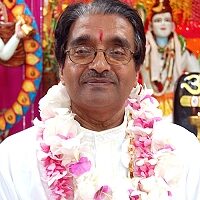


From the teachings of Pt. Balram Persad, Spiritual Leader, SWAHA Om Shakti Mandali
The divine observance of Narasimha Jayanti, commemorated this year on April 19, recalls one of the most powerful manifestations of Bhagavan Vishnu. The appearance of Narasimha Bhagavan is understood as an act through which the Divine restores righteousness and brings an end to tyranny. Yet the depths of meaning of this episode is even more compassionate: the Lord incarnates not only to uphold Dharma but also to save even a single devoted soul.
The story centres on the young devotee Prahlad, whose unwavering faith in Vishnu Bhagavan remained steadfast despite constant persecution by his father, the powerful king Hiranyakashipu. The king, intoxicated with power and convinced of his own invincibility, had secured from the Gods a complex wish that he believed made him impossible to destroy. He could not be killed by man or animal, neither during the day nor at night, neither indoors nor outdoors.
Prahlad, however, continued to proclaim that the Lord is present everywhere. Enraged by his son’s devotion, Hiranyakashipu demanded to know whether Vishnu existed even within the palace pillars. When the pillar was struck, the Divine manifested in a form that transcended every condition of the king’s divine boon.
From the pillar emerged Narasimha Bhagavan, the awe-inspiring form of the Lord who is neither fully man nor animal, but half man and half lion. At twilight (neither day nor night), upon the threshold of the palace (neither inside nor outside), the Lord destroyed the tyrant and brought an end to his oppression. In doing so, He upheld righteousness, but above all He answered the sincere call of His devotee.
Tradition recounts that Narasimha Bhagavan, pleased by Prahlad’s steadfast devotion, blessed him with words that express the heart of the Divine promise: the sincere heart, filled with faith and trust in the Lord, is ultimately freed from the cycle of birth and death.
The Symbolism of the Form of Narasimha Bhagavan
The striking form of Narasimha Bhagavan carries profound symbolic meaning. Depicted as half man and half lion, this manifestation brings together the noblest qualities of both realms of creation.
In the traditional understanding of the natural world, the human being is regarded as the highest expression within the chain of living species. At the same time, the lion has long been considered the most majestic among animals. In the Bhagavad Gita (Chapter 10), Bhagavan Krishna declares: “Among all quadrupeds, I am the lion.”
The form of Narasimha Bhagavan therefore unites the excellence of both the human and the animal realms. Its symbolism reminds us of an important spiritual teaching: whatever role we occupy in life, we should strive to embody the highest qualities within it. By offering the best of our abilities, character and effort to the Divine, we transform our actions into acts of devotion.
A Symbol within the Journey of Evolution
The appearance of Narasimha Bhagavan also reflects a deeper philosophical idea found in the tradition of the Avataars of Vishnu Bhagavan. The various incarnations are sometimes understood as representing stages within the unfolding of life and consciousness.
Beginning with Matsya, the fish, and Kurma, the tortoise, the incarnations move through forms associated with aquatic and amphibious life. Later on, there appear beings connected to the land, such as Varaha, the boar. Narasimha Bhagavan stands at a transitional point within this sequence: an embodiment that combines animal and human characteristics.
After this stage come the fully human incarnations such as Vaaman, the dwarf, and later the great exemplars Shree Raam and Shree Krishna. In this way, Narasimha Bhagavan represents a moment in the spiritual and symbolic journey through which the individual evolves toward higher states of character and discipline, culminating in the ideal of Maryada Purushottam, exemplified by Shree Raam.
Humanity and the Harmony of Nature
The form of Narasimha Bhagavan also reminds us that humanity is not separate from the natural world. The scriptures teach that the five elements, earth, water, fire, air and space, exist both in the universe and within the human body. What is present in the vast cosmos is reflected within the individual.
This relationship highlights the harmony and interdependence between human beings and the natural environment. Nature provides the conditions necessary for life, sustenance, shelter and nourishment, and therefore deserves reverence and care. Narasimha Bhagavan’s form, blending human and animal elements, symbolically affirms this deep connection between humanity and the wider creation.
The Power of Devotion
Ultimately, the appearance of Narasimha Bhagavan arose through two powerful forces: the arrogance of Hiranyakashipu and the unwavering devotion of Prahlad. While the king’s complex wish seemed to guarantee his invulnerability, the Divine manifested in a way that transcended every limitation of that wish.
Yet the deeper cause of the Lord’s appearance was the pure devotion of Prahlad. His faith did not waver in the face of fear, punishment or isolation. It was that devotion that drew the Divine presence into the world.
The message of Narasimha Jayanti therefore reaches beyond the dramatic story of the destruction of a tyrant. It affirms a more personal and reassuring truth: the Lord does not overlook the anguish of a devoted heart. Even for the sake of one genuine devotee, the Divine will manifest, defend and guide.
