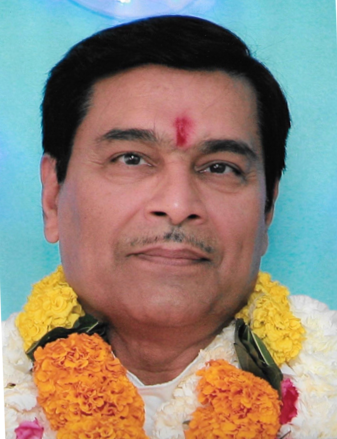

From the teachings of Pt. Balram Persad, Spiritual Leader, SWAHA Om Shakti Mandali
Shree Krishna Janmashtami is a night of celebration, devotion and prayer. Yet the meaning of the occasion is not simply found in remembering that Shree Krishna appeared in the world at a particular time and place. It lies in discovering what he means to us here and now. Religion, it is said, is not merely a subject to be discussed. It is something to be experienced.
On Shree Krishna Janmashtami, surrounded by prayer, music, sacred rituals and the chanting of the Lord’s name, each devotee is invited to move beyond simply hearing about Shree Krishna and to experience something of His presence within.
Shree Krishna, the One Who Takes Away
The name Shree Krishna carries the meaning of one who attracts or takes away. But what does the Lord take away?
He does not take away the fruits of our honest efforts or the things we have worked hard to achieve. Rather, Shree Krishna helps us release the things that we may be unable to remove from ourselves: the anger, greed, lust, fear and other negative tendencies that repeatedly obstruct our progress.
This is where divine grace becomes important. We do what we can, but we also acknowledge that there are things we cannot overcome by our own strength alone. We turn towards Shree Krishna and ask for help.
In this sense, Shree Krishna is not merely a character of the past. He becomes the divine presence to whom we can turn when our strength is insufficient.
When the World Calls for Help
The story of Shree Krishna’s appearance begins at a time when the world is in distress. Yet his birth reminds us that the world contains both the worst and the best of humanity: those who cause suffering and those who care deeply enough to work towards making society better.
When suffering becomes overwhelming, people turn towards God. The story tells us that the prayers of devotees were heard. The environment itself seemed to call out for divine intervention, and the Lord manifested to bring joy and relief. This carries a powerful message for our own lives.
Sincere prayer matters. The Lord does not respond only to some people. Divine grace is not reserved for a select few. God knows our needs and responds according to what is required. The challenge for us is to pray with sincerity.
The Night of Shree Krishna’s Appearance
The Shrimad Bhagavatam describes the moment of Shree Krishna’s appearance in extraordinary imagery.
It was the eighth day of the dark fortnight of Bhadrapada, under the Rohini constellation, at midnight. Yet although it was the darkest part of night, the world seemed transformed.
The directions became clear. The stars shone brightly. The rivers became pure and cool. Lotuses blossomed. Birds sang. A gentle, fragrant breeze moved through the landscape. Sacred fires were rekindled, and the hearts of holy people were filled with joy. Even the heavens seemed to celebrate. The gods and celestial beings rejoiced, music filled the heavens and flowers were showered upon Vraja. Nature itself appeared to welcome the divine arrival.
There is a beautiful lesson in this imagery. The birth of Shree Krishna is presented as an event that brings light into darkness, harmony into disturbance and beauty into a world in distress. His appearance is a symbol of hope. Even in the darkest night, light can appear.
The Prison and the Freedom Within
Shree Krishna was born in a prison. A prison is a place of confinement, yet the human mind can create prisons of its own. Fear, hatred, resentment, anger, insecurity and ego can surround us with invisible walls. We may appear free externally while remaining imprisoned internally.
Shree Krishna’s appearance in a prison reminds us that divine grace can enter even the darkest and most confined circumstances.
Where we see limitation, God can bring freedom.
Where we see fear, God can bring courage.
Where we see darkness, God can bring light.
The physical prison in the story therefore becomes an image of something deeply familiar to the human experience: the ways in which we imprison ourselves through the thoughts and emotions we cannot release.
The Beauty of the Divine Form
When Shree Krishna appeared before Vasudeva and Devaki, He manifested in His divine form, adorned with magnificent ornaments and symbols of His divinity.
Each element carries significance.
The Vaijayanti Mala, a garland of forest flowers and precious gems, represents the five elements and the vastness of the cosmic order.
The Kaustubha Gem represents the pure and enlightened soul, radiant and brilliant.
The Kaumodaki Mace represents power, knowledge and sovereignty.
The Shrivatsa mark upon His chest signifies the presence of Goddess Lakshmi and divine auspiciousness.
His yellow garments, or Pitambara, represent pure and infinite consciousness manifesting in the world.
These are not merely decorative details. They remind the devotee that Shree Krishna’s form points beyond itself. The image gives the mind something upon which to focus while simultaneously directing the heart towards something greater than the physical form.
May Bhagavan Sri Krishna bless us with the wisdom to recognise His presence, the faith to call upon Him in times of difficulty, and the humility to become instruments through which His love and compassion may flow.
