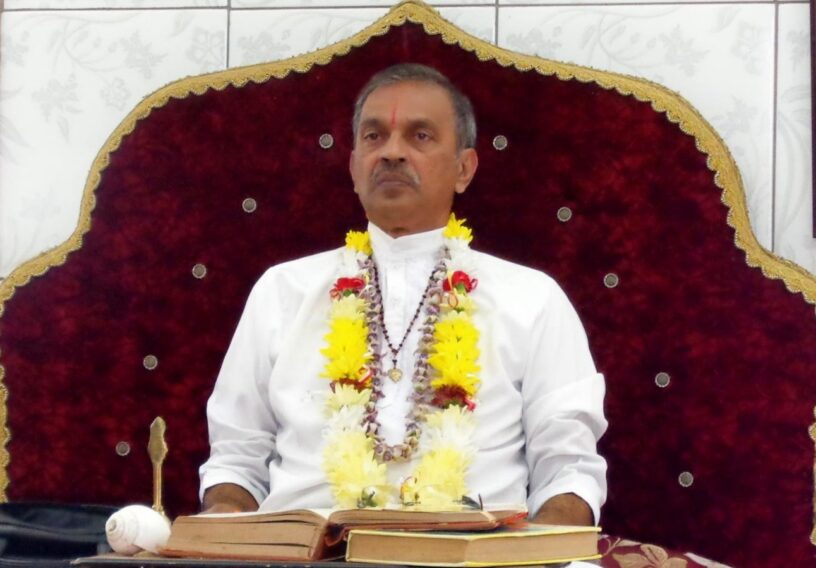


From the teachings of Pt. Gyandeo Persad, Spiritual Leader, SWAHA Sukh Shanti Bhakti Mandali
The story of Shree Krishna and Mount Govardhan is more than a story of devotion, worship and divine intervention. It offers a profound reflection on the difference between ritual performed out of habit and sat-karma: actions performed with righteousness, wisdom and a high purpose.
When Shree Krishna was still a child in Gokula, he questioned the traditions and practices of those around him. His questioning was not born of disrespect, but of wisdom. He encouraged his father and the community to look beyond ritual and understand the purpose behind their actions.
One such occasion was the worship of Govardhan mountain. Shree Krishna pointed towards the mountain and said, in essence: Here is Govardhan Swami. If you wish to worship, then worship Govardhan. Worship him together with the cows and all that sustains your community.
This simple instruction challenged the conventional understanding of worship at the time. Shree Krishna asked his father and the villagers to consider why they were performing particular rituals and what they hoped to receive from them.
Beyond Ritual
Shree Krishna’s teaching was not that worship or yajna was without value. Rather, he encouraged people to understand the difference between performing an action merely because it was customary and performing an action with genuine spiritual understanding.
There are many forms of ritual and sacrifice, and they may bring certain benefits. Yet, as the teaching reminds us, material or temporary benefits are not the same as spiritual liberation.
The deeper path is sat-karma: righteous and purposeful action.
When our actions are aligned with dharma, compassion, service and devotion, they become more than rituals. They become offerings.
This is one of the important lessons contained within Shree Krishna’s teachings: we should seek not merely the fruits of our actions, but the blessings and spiritual growth that arise from righteous action.
Shree Krishna, the Teacher Who Began as a Child
It is easy to think of Shree Krishna primarily as the great teacher of the Bhagavad Gita, standing on the battlefield of Kurukshetra and imparting profound spiritual wisdom to Arjuna.
But Shree Krishna’s teachings did not begin at Kurukshetra. They were woven throughout his entire life. Even as a child, Shree Krishna demonstrated qualities that would later become central to his teachings: questioning, discernment, courage, compassion and an understanding of dharma. His childhood actions were not separate from his spiritual message. They were expressions of it.
The episode of Mt. Govardhan is therefore another part of Shree Krishna’s teaching. Through a seemingly simple act involving a mountain, cows and a village community, he invited people to reconsider the purpose of worship itself.
Govardhan and the Natural World
Mt. Govardhan represents the natural world that sustains life. The mountain provides pasture for the cows. The cows, in turn, sustain the community. The people depend upon the land, the animals and the natural environment around them. By directing the villagers’ attention towards Govardhan, Shree Krishna was encouraging gratitude for the immediate sources of their sustenance.
There is a beautiful simplicity in this teaching. Worship is not merely about asking for blessings. It is also about recognising and honouring the blessings that already surround us. The mountain, the cows, the land and the community are all interconnected. To honour them is to recognise our place within a larger web of life.
The Wisdom of Gopala
Shree Krishna is known by many names, each reflecting a different aspect of his divine nature. As Gopala, he is the protector and caretaker of cows. He is the playful child of Gokula, yet within that child is profound wisdom. This is part of what makes Shree Krishna’s story so compelling. Divine wisdom does not always appear in solemn or conventional forms. Sometimes it appears through the words of a child.
Shree Krishna’s childhood teachings remind us that wisdom is not necessarily measured by age. A person may possess the capacity to see what others have overlooked, to question what has become routine and to reveal a deeper truth beneath it.
From Action to Blessing
The meaning of Mt. Govardhan ultimately returns us to the nature of our own actions. We perform many actions throughout our lives. Some bring immediate rewards; others may appear to produce little visible benefit. Some are performed because they are expected of us, while others arise from genuine understanding and compassion.
Shree Krishna encourages us to consider the quality and intention behind what we do. Actions motivated only by temporary gain may provide temporary results. But actions grounded in righteousness, devotion and selflessness can transform us. The spiritual journey therefore asks us to move beyond simply asking:
“What will I receive from this?”
and towards:
“What is the right thing to do?”
That shift, from personal reward to righteous action, is at the heart of the teaching.
The Eternal Message of Govardhan
The story of Mt. Govardhan is therefore not simply about a mountain or an ancient act of worship. It is a reminder to live with awareness. It invites us to honour nature, value what sustains life, question actions that have become empty rituals, and choose deeds that carry spiritual meaning. And above all, it reminds us of Shree Krishna, not only as the great teacher of Kurukshetra, but as Gopala, the beloved child of Gokula, whose wisdom was present even in his earliest years.

Leave a Reply