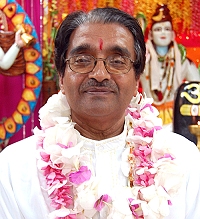

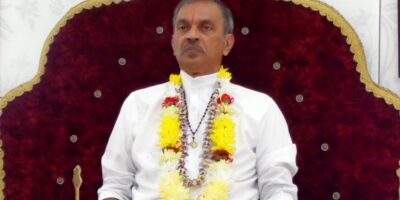

From the teachings of Paramacharya of SWAHA, H.H. Pt. Hardeo Persad
The sacred month of Kaartik is regarded as a time of intensified spiritual discipline, devotion and sacrifice. It is a period in which devotees are encouraged to turn inward, purify the mind, strengthen their connection with the Divine and deepen their spiritual practices.
Among the important observances of this auspicious month is Kaartik Poornima Snaan, the ritual bathing associated with Kaartik. More than a physical act of cleansing, it represents an opportunity for internal purification: a symbolic washing away of distractions, attachments and impurities of the mind.
The culmination of Kaartik is therefore not simply the completion of a month on the calendar. It represents the completion of a period of conscious spiritual effort: a month of sacrifice, discipline, devotion and renewed connection with the Divine.
The Auspiciousness of Kaartik
Kaartik invites us to practise restraint and to move away from excessive attachment to the senses. Much of our sadness arises when the mind seeks satisfaction through the external world. We want more, we compare ourselves with others, we become attached to possessions and experiences, and we allow temporary circumstances to determine the peace of mind.
The teachings of Kaartik offer another path:
True happiness begins with mastery of the mind.
When the mind is aligned with divine principles, when desires are moderated and when we learn to detach ourselves from excessive sensory indulgence, a deeper form of peace becomes possible.
This is where bhakti, devotion, becomes a powerful force. Devotion does not merely give us something to worship. It gives the mind something of value upon which to focus. Through devotion, we can overcome negativity, internal conflict and the restless movements of the mind.
Kaartik Snaan: More Than Physical Cleansing
The auspicious bath of Kaartik is therefore deeply symbolic. Water cleanses the body, but the spiritual purpose of Kaartik Snaan is to encourage the cleansing of consciousness. As the devotee enters the auspicious waters, the act can become an expression of surrender:
May I release what no longer serves my spiritual journey.
May I cleanse my thoughts, intentions and actions.
May I emerge with a mind that is clearer, purer and more devoted to the Divine.
The Ganges holds particular significance in this tradition. Its sacred flow can be contemplated not only as a physical river but also as a spiritual metaphor. Just as the Ganges continually flows, we too are called to learn how to release attachment and allow life to move forward.
Tulsi Maa: The Living Presence of the Divine
One of the most beautiful dimensions of Kaartik devotion is the reverence shown to Tulsi Maa, the auspicious Tulsi plant.
Tulsi is not regarded simply as a plant to be kept in the home. She is revered as a living divine presence, associated with purity, devotion and the Devtas
Tulsi represents far more than physical prosperity. Her presence reminds us of spiritual wealth: the wealth of purity, devotion, discipline, gratitude and divine consciousness.
A Tulsi plant in the home can therefore become more than part of a religious tradition. It can become a daily reminder:
Live with purity. Live with devotion. Live with reverence.
When we care for Tulsi and worship her with sincerity, we are also being reminded to cultivate those qualities within ourselves.
Satyanaraayan and the Purification of the Mind
Another profound teaching associated with this period is devotion to Satyanaraayan, the Supreme Purusha and embodiment of truth.
The name itself carries an important message: Satya is truth, while Naraayana refers to the Divine Lord.
The teachings remind us that He is all-pervading; that the Divine is present everywhere, in every aspect of creation and in every atom of existence. To worship Satyanaraayan, therefore, is not simply to perform a ritual. It is to turn the mind towards truth.
And this brings us to one of the most important questions we can ask ourselves:
What is the present state of my mind?
Sattvic, Rajasic or Tamasic
Hindu philosophy describes three fundamental qualities, or gunas, that influence the nature of the mind:
Sattva represents purity, clarity, balance and spiritual awareness.
Rajas is associated with activity, restlessness, ambition and attachment to the material world.
Tamas is associated with dullness, inertia, confusion and a lack of awareness.
At any given moment, we may recognise elements of all three within ourselves.
The spiritual journey is the movement towards sattva, towards a purer, calmer and more balanced state of consciousness. This is one of the deeper purposes of worshipping Satyanarayan. Through prayer, devotion, self-reflection and spiritual discipline, we seek to lift the mind from restlessness and inertia towards clarity and truth.
But simply hearing these teachings is not enough. We must examine ourselves.
What is the state of my mind today?
Am I restless and overly attached to material concerns?
Am I distracted and spiritually disengaged?
Or am I cultivating clarity, peace, truth and devotion?
The answer is something each person must discover within themselves.
The Divine Is Everywhere
The teachings of Kaartik repeatedly return us to the understanding that the Divine is not confined to one place, one form or one moment.
Shree Satya Naraayana is everywhere.
He is present in creation, in nature, in the ocean, in the heart of the devotee and in the world around us. This understanding changes the way we see life. If the Divine is everywhere, then our relationship with the world should be an attitude of devotion.

Leave a Reply