
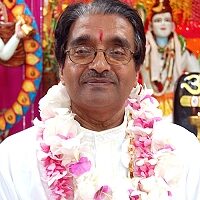


From a satsang by Pt. Dr. Umesh Persad, Spiritual Leader, Shiva Shakti Mandir of Marion Oaks, Fl., USA
As we celebrate Divali in October, let us look at the virtue of even-mindedness, a quality deeply connected to the serenity and tranquillity of mind described in the shat sampat: the six forms of spiritual wealth manifested by Lakshmi Devi. Among these treasures are faith, endurance and inner calm, qualities that guide us to live with balance amidst life’s challenges. Just as Lakshmi Maa embodies abundance and spiritual enlightenment, she also represents the wealth of equanimity, reminding us that true prosperity lies in a mind that is steady, serene and free from agitation.
In the study of the Raamaayana, we often turn to its eternal wisdom, seeking principles that remain relevant in the modern world. The Baalakaanda offers us a beautiful reflection on the qualities of saints:
“I revere the saints who are even-minded towards all and have no friend or foe, just as a gracious flower, clasped in both hands, sheds equal fragrance on the two: the one that plucked it and the other that held and preserved it.”
The image of the flower reminds us that true nobility is found in treating all alike, those who are kind to us and those who may not be, with equal consideration and love. Saints are described as innocent at heart, desirous of the welfare of the world and steady in their even-mindedness. To walk towards the feet of Shree Raam is to take an example from them.
The Practice of Even-Mindedness
Even-mindedness, or equanimity, is not indifference. It is a state of mind that remains steady, not swayed by praise or blame, gain or loss, happiness or pain. Just as we secure our homes from the weather, so too must we guard the mind when emotions threaten to overwhelm us.
Desires and emotions are natural, but when uncontrolled, they lead to anger, jealousy, pride, attachment and greed. Recognising these tendencies is the first step to freedom. The mind, after all, can be the cause of bondage, or the cause of liberation. Then we must seek to reduce that upset feeling by distracting the mind and eventually the negative emotion will subside.
Practical Strategies for Cultivating Balance
- Awareness: The moment we feel ourselves getting upset, pause and recognise the emotion. Awareness itself reduces its hold.
- Perspective: Remember the teaching of the Yoga Sutras: be friendly towards the happy, compassionate towards the unhappy, delighted in the virtuous and indifferent towards the wicked.
- Self-talk: Like athletes who encourage themselves in the third person, use gentle self-talk to calm your mind during provocation.
- Breathing: Deep breathing activates the vagus nerve, helping us return to calmness.
- Engagement: Choose not to argue. Arguments are often about ego, not truth. Instead, practise silence or detachment.
- Lifestyle: Alongside prayer, mantra and meditation, physical activity helps release negative energy and balance the mind.
Childlike Innocence, Saintlike Strength
We are called to cultivate a childlike simplicity in how we treat others: with openness and love. Inevitably, there will be people who try to hurt us. But our response is our choice. By remaining principled, calm and compassionate, we reflect the qualities of the saints and advance towards the feet of Shree Raam.
The flower sheds its fragrance equally to all. In the same way, let us strive for even-mindedness. For in equanimity is strength of mind and the pathway of devotion.
