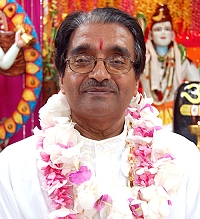


From the teachings of Paramacharya of SWAHA, H.H. Pt. Hardeo Persad
Sanaatan Dharma, the eternal spiritual tradition, teaches that the Supreme Reality reveals Itself in different forms across the ages to sustain Dharma and guide humanity. These holy appearances are known as Avataars, divine manifestations through which the Infinite makes Its presence felt within the world.
The idea of Avataar is not just a matter of legend or symbolism. Rather, it reflects a profound philosophical understanding of the relationship between the Divine and creation, and of the ways in which the Supreme responds to the moral and spiritual needs of the world. The calendar of religious observances throughout the year reminds devotees of these divine appearances and invites reflection on their meaning.
Leela Avataars: The Divine Presence in the World
One of the most widely recognised expressions of this principle is the concept of Leela Avataars, incarnations through which the Divine enters the world as part of the cosmic play. In these manifestations, the Supreme takes form within human history, guiding events and restoring harmony when righteousness decreases.
The Shrimad Bhagavatam speaks of 23 such manifestations, with some traditions including Lord Buddha as the 24th. Among them are the well-known Dasha Avataars, beginning with Matsya, the Fish incarnation, and culminating in Kalki, the future Avataar expected to appear at the close of the present epoch, Kali Yug.
Each Avataar reflects a particular stage in the spiritual and moral evolution of the world. Through these divine appearances, the Avataar shows that whenever Dharma is threatened, the defence of truth and justice is assured.
The Hindu calendar preserves the memory of these divine descents through the observance of Jayanti, the birth anniversary of each Avataar.
Divine Jayantis in the Month of April
During the month of April, devotees observe the birth anniversary of several Avataars of Bhagavan Vishnu. Each Jayanti recalls a moment when the Divine intervened to restore balance and defend the path of righteousness.
Parshuram Jayanti (April 19) honours the sixth Avataar of Vishnu. Known as “Raam with the axe”, Parshuram is remembered for his uncompromising dedication to justice and for restoring moral order during a time when power had been misused and Dharma had decreased.
Narsimha Jayanti celebrates the fourth Avataar, the awe-inspiring manifestation of the Lord as half man and half lion. In this form, Vishnu Bhagavan appeared to save His devoted follower Prahlad and to destroy the tyrant Hiranyakashipu, demonstrating that the Divine always safeguards his true devotees.
Kurma Jayanti commemorates the second Avataar, when the Lord assumed the form of a tortoise to support Mount Mandara during the great Samudra Manthan, the churning of the cosmic ocean by the devas and asuras. Through this act the Divine upheld the balance of the universe and enabled the emergence of many sacred treasures.
These observances remind devotees that whenever Dharma is threatened, the Divine responds with compassion and purpose.
The Known, the Unseen and the Absolute
The scriptures describe our experience of Divinity in several stages of understanding. The first encounter with the Divine is through those closest to us. The ancient injunctions, Maatri Devo Bhavah, Pitri Devo Bhavah, Aachaarya Devo Bhavah, remind us that Mother, Father and Guru are to be honoured as embodiments of the Divine. Through their love, sacrifice and guidance we first learn reverence, discipline and wisdom.
Beyond this immediate experience lies the realm of the deities: Durga Maa, Lakshmi Maa, Saraswati Maa, Bhagavan Shiva, Hanumanji, Ganeshji and many other divine forms. Their forms and stories are familiar to devotees, yet the full depth of their divine nature remains beyond ordinary understanding.
Beyond both the known and the partially known lies the Absolute Reality, called Brahm. This Reality is without form, beyond qualities and beyond all limitation. The sages describe it through the expression “Neti, Neti”, “not this, not that”, indicating that the Supreme Truth transcends every human definition.
In this transcendent state, the Divine is known as Nirguna Brahm, the formless and attributeless Reality that is within all existence.
Yet, out of compassion for creation, the Infinite also manifests with name and qualities as Saguna Brahm, entering the field of time and space so that beings may know and relate to the Divine. In this manifested aspect the Supreme engages in the cosmic functions of creation, preservation and dissolution.
Guna Avataars: Divine Functions in Creation
When the Supreme manifests within creation, it operates through the three gunas: sattva (purity and harmony), rajas (activity and creativity) and tamas (inertia and dissolution). These fundamental principles shape the workings of the universe.
In this framework, the One Reality expresses Itself as the well-known divine forms of Brahma, Vishnu and Shiva, often described as Guna Avataars.
Lord Brahma represents rajas, the creative impulse through which the universe comes into being.
Bhagavan Vishnu embodies sattva, the sustaining force that preserves order and balance.
Lord Shiva reflects tamas, the power through which dissolution occurs, clearing the way for renewal and transformation.
These are not separate or competing deities, but different expressions of the same Infinite Reality, Brahm, revealing the many facets of the Divine presence within the universe.
Vyuha Avataars: Sacred Manifestations in the Epics
Our religious literature also speaks of Vyuha Avataars, manifestations of the Divine that appear in complementary forms to fulfil a larger cosmic purpose.
In the Ramaayan, Shree Raam and His brothers, Lakshman, Bharat and Shatrughna, are regarded in some traditions as such manifestations. During Dwaapar Yug, these divine aspects appeared again as Shree Krishna, Balram, Pradyumna and Aniruddh.
Through these sacred appearances, the Divine participates directly in the unfolding of Dharma, responding to the needs of each age and to the devotion of seekers.
The teaching of Avataar offers both reassurance and inspiration. It reminds us that the Supreme Reality is not distant or indifferent. The Infinite, while transcending all creation, also enters it again and again, to guide humanity toward truth, harmony and spiritual advancement.
