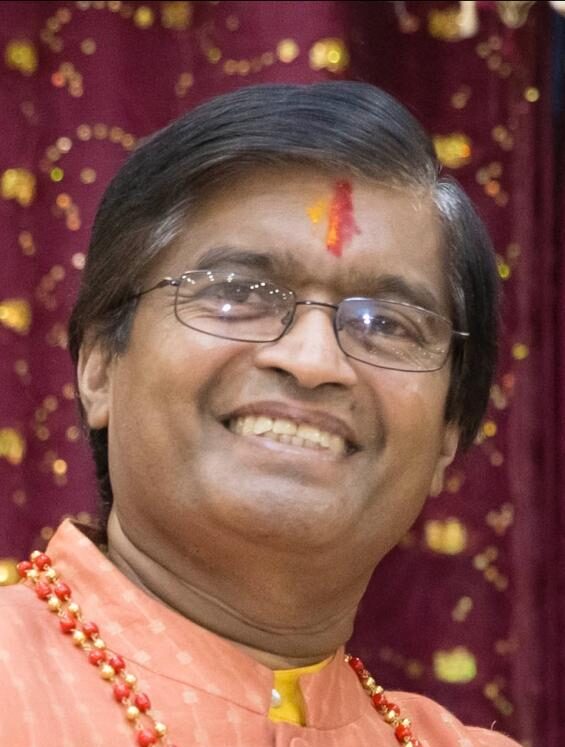
From a satsang with Pt. Maniedeo Persad, Spiritual Leader, SWAHA Sri Raam Dhaam and Managing Director, ieTV and ieRadio
On August 26, Hindus around the world will joyfully celebrate Ganesh Jayanti, the divine appearance day of Bhagavan Shri Ganesh, the Divine Remover of Obstacles, Lord of Wisdom and Guardian of Beginnings.
Hinduism is full of symbolism and every murti (sacred form) carries profound philosophical meaning. Among all deities, Ganeshji is perhaps the most recognisable, with His elephant head, large belly, laddu in hand, and the humble mouse at His feet. To the casual observer, He may even appear comical or whimsical. But beneath His playful form is profound spiritual symbolism.
A Universal Deity Beyond Borders
The reverence for Ganesh is not confined to India alone. Throughout history, evidence of Ganesh worship has been discovered as far afield as Southeast Asia and even South America, where ancient civilizations like the Aztecs and Incas paid homage to similar forms. In Bali, Japan and within Buddhist traditions, Ganesh appears under slightly different names and depictions, yet His essence remains the same: the guiding force of wisdom, clarity and spiritual discernment.
Both Shaivites and Vaishnavites worship Ganesh, affirming His place as a unifying figure in the Hindu pantheon. At SWAHA Sri Raam Dhaam, the establishment of the Ganesh temple in September 1999 marked an important chapter in our own spiritual landscape, reminding us of His enduring significance.
Symbolism in the Form of Ganeshji
Every element of Ganeshji’s form is steeped in symbolism. Consider the small mouse, His vehicle, holding a sweet, yet looking at Ganesh Bhagavan. It symbolises the disciplined mind, aware of desire yet not consumed by it. In life, people may suffer due to unfulfilled desires, but Ganeshji teaches us to discern: are they aligned with our growth, or are they obstacles to our spiritual evolution? Through self control and wisdom, we learn to choose what truly benefits us.
Ganeshji’s posture also tells a story: he has one foot firmly planted on the ground and the other raised. This imagery conveys a powerful spiritual teaching: we must live in the world and take care of worldly responsibilities, yet always be elevated by spiritual awareness. Thus, we are called to care for our homes, families, communities and temples, but simultaneously, we must be aware of life’s impermanence and the eternal truth of our divine origin.
Balancing Dharma and Spiritual Growth
Hindu philosophy offers a blueprint for life through its four stages:
- Brahmacharya (student life),
- Grihastha (householder),
- Vanaprastha (retired life) and
- Sanyaasa (renunciation).
Each stage carries its own dharma, and each must be embraced with awareness and integrity. We are encouraged to live fully in the world, yet gradually shift our focus inward, nurturing our connection to the Divine.
Even as we meet material obligations, we must ensure that spiritual growth remains constant. We are physical, mental, social and spiritual beings, and as Mahatma Gandhi reminded us, to be truly whole, all four aspects must be developed.
The Message of Ganesh
Ganeshji’s message is clear: Live in the world, but cultivate your spirituality. Tend to your duties, love your family, build your community; but also nourish your spiritual life. Cultivate stillness, clarity and divine wisdom. Teach your children to do the same. Let your home be a place where both material wellbeing and spiritual elevation are honoured.
Every day, spend time to sit with your spirituality: Pray. Reflect. Chant. Serve. In doing so, we place one foot on the earth and the other in the divine, just as Ganeshji depicts.
The principle of Ganesh Bhagavan is the key to success: not just in external ventures, but in the journey towards peace, fulfilment and liberation. As we celebrate His divine presence on Ganesh Jayanti, may we follow a balanced way of living, where the material and the spiritual are not in conflict, but in harmony.
