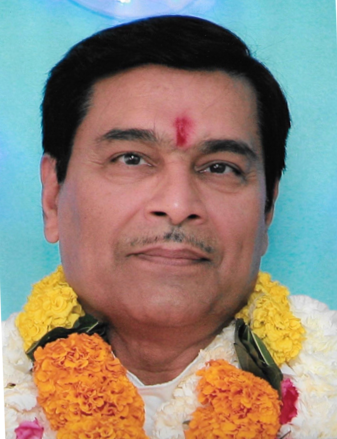
From a satsang with Pt. Balram Persad, Spiritual Leader, SWAHA Om Shakti Mandali
In the dialogue of the epic Mahaabhaarata, King Yudhiṣṭhira once asked Bhagavaan Shri Krishna about the greatness of Ekaadasi, those holy days that occur twice each lunar month, on the waxing and waning day of the moon. Among them, Putradaa Ekaadasi, observed in the month of Maagha (January-February) holds a special place, for it is associated with progeny, continuity and divine grace.
Shri Krishna responded by narrating a poignant story. Long ago, there lived a king and queen who were devoted, righteous and lovingly married. Yet their happiness was shadowed by one deep sorrow: they were childless. Despite their sincere prayers, fasts, pilgrimages, charity and meditative practices, their desire remained unfulfilled. The king never neglected his duties to his people, his kingdom or his ancestors, faithfully performing tarpan and pitra puja. Still, no visible fruits appeared. Overcome by grief and confusion, he began to question himself: What is absent in my devotion? Why does suffering persist even though we are living righteously?
One day, he left his palace in search of answers. Wandering through forests, surrounded by unfamiliar sights and sounds, he felt fear, hunger and exhaustion. Yet inwardly, his questioning deepened. Such moments of sincere introspection are familiar to many devotees, for the spiritual path often invites us to examine our lives with honesty and humility. Still, the king did not abandon hope. As the saying goes, a seeker must persevere.
Along his journey, he came upon a serene lake adorned with lotus flowers. The lotus, rooted in mud yet rising pure and untouched above the water, reminded him that even amid difficulty, one must strive upward toward higher consciousness. Nearby, he heard sages chanting sacred mantras: Om Namo Naaraayanaaya. Instantly, his troubled mind found peace. This is the power of naam sankirtan: whether we chant the Lord’s name ourselves or listen to others, the heart is uplifted and calmed.
The king humbly approached the sages, bowing respectfully to each one individually. Pleased by his sincerity, they revealed themselves as the Vishva Devas. When the king poured out his sorrow, especially his fear of leaving without an heir to care for his wife, kingdom and final rites, they offered him hope. They instructed him to observe Putradaa Ekaadasi with faith: to fast, pray, meditate and glorify Lord Vishnu with sincerity and self-discipline.
The king followed their guidance with devotion. In time, by the grace of Bhagavaan and the power of Ekaadasi observance, he was blessed with a son who brought joy, continuity and fulfilment into his life. Thus, Putradaa Ekaadasi came to be known as a vrat that nurtures both worldly responsibilities and spiritual growth.
Beyond the katha, Ekaadasi carries deep spiritual and cosmic significance. Human life is intimately connected with the rhythms of the universe. The sun influences the moon, the moon influences the mind, and the mind, in turn, affects the subtle energy centres, the chakras within the body. On Ekaadasi, the alignment of these forces is considered especially conducive to spiritual practice. The Ajna chakra, at the forehead, associated with insight and intuition, and the Anaahata chakra, at the heart, associated with love and compassion, are said to be particularly receptive. Hence, fasting, prayer, meditation and the worship of Lord Vishnu are strongly recommended on these days.
Traditionally, devotees refrain from eating rice on Ekaadasi. Symbolically, the practice reminds us to live with restraint, awareness and purity. Ancient lore speaks of a demon, Mura, who sought refuge in grains of rice, but the deeper meaning is spiritual: mura signifies a covering or obscuration. Ekaadasi invites us to remove the coverings of ignorance, excess and attachment, allowing our true, divine nature to shine forth.
Ultimately, Ekaadasi calls us to a life of clarity, purity, kindness and spiritual discipline. It reminds us that faith is not passive; it is sustained through effort, patience and trust in divine timing. Results may not come immediately, but sincere devotion never goes in vain. Our tradition is profoundly solution-oriented, offering paths suited to different temperaments and needs, guiding us gently but firmly toward upliftment.
May the observance of Ekaadasi inspire us all to rise above our difficulties, strengthen the internal resolve and walk steadily toward spiritual fulfilment under the grace of the Lord.
